Archive for the ‘cambridge’ Tag
Spiral
Filed under: inspiration, irish, musings, quotations | Tags: cambridge, nabokov, philosophy, quotation, quotations, quote, shapes, spiral, spiritual, stone, sussex, yeats
 Leave a comment


“Life is a journey up a spiral staircase; as we grow older we cover the ground covered we have covered before, only higher up; as we look down the winding stair below us we measure our progress by the number of places where we were but no longer are. The journey is both repetitious and progressive; we go both round and upward.” [William Butler Yeats]
Fellow writer Vladimir Nabokov saw similarly…
“The spiral is a spiritualized circle. In the spiral form, the circle, uncoiled, has ceased to be vicious; it has been set free.”
Life as repetitious and progressive is an uplifting image. The repetition such as the cycling of the seasons or the rising and setting of the sun brings the comfort of familiarity, as well as reliability and connection to history. The progress and rising reflects the acquisition of wisdom and understanding.
Story Snippet: Secret tattoo
Filed under: stories, story snippets | Tags: cambridge, cambridge university, hinduism, kundalini, snake, snakes, stories, symbolism, tattoos, yoga
Leave a comment 
I am in Cambridge delivering a lecture at a Modern & Mediaeval Languages symposium taking place at my alma mater Girton College. I meet my old Director of Studies, now retired and into her eighties, perhaps a bit fragile but still pretty much as sharp as ever. It comes out in conversation that I have made 52 tattoo films since leaving this place (I am writing this post in a fine room overlooking the beautiful college grounds the morning after). Those 52 films include a series called ‘My Secret Tattoo‘ which I commissioned at Channel 4. Unexpectedly, she reveals that she has a tattoo which she got in the 60s as a wedding gift. It is a snake with rays coming out of its head. Her husband also got one then – a snake eating its own tail. It must have been really unusual back then in an age where tattoos were more for sailors and the like. It is discreetly on her foot. She’s about the last person I would have expected to have ink.
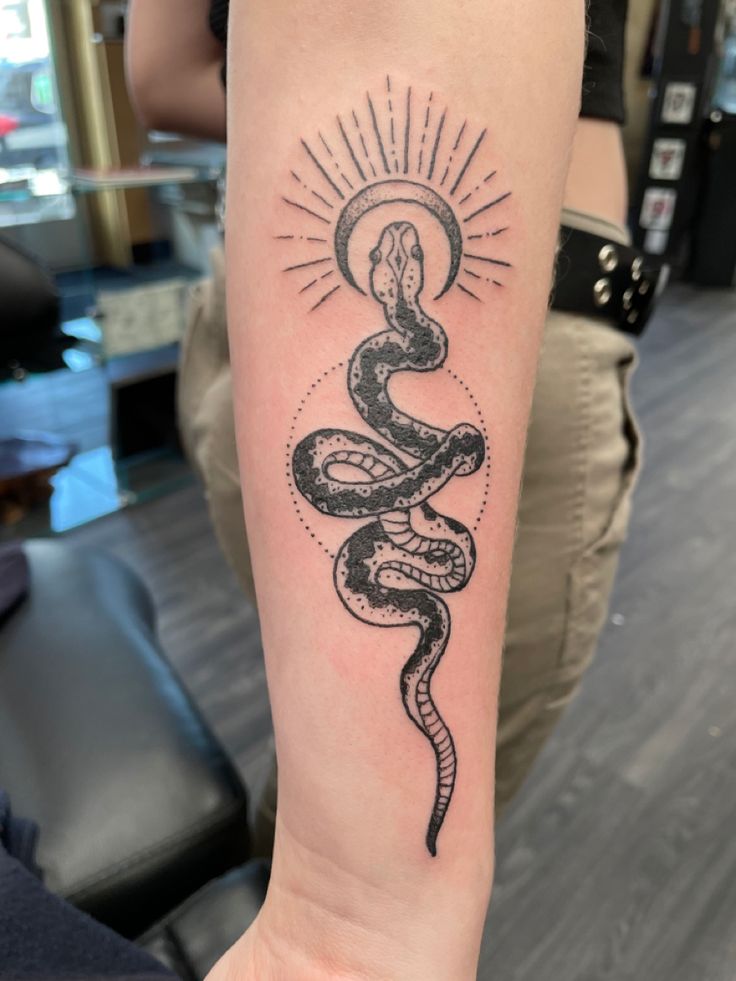

In Hinduism and Yoga ‘kundalini’ (Sanskrit for ‘coiled’/’circular’ or ‘coiled snake’) is a form of divine feminine energy (or ‘Shakti’) believed to be located at the base of the spine. This energy in the body, when cultivated and awakened through tantric practice, is thought to lead to spiritual liberation. When awakened, Kundalini energy can rise up the spine, activating and opening the chakras, energy centres located along the spinal cord. The Kundalini snake is often depicted as a serpent coiled at the base of the spine, ready to rise up and awaken. The snake is also a symbol of transformation and rebirth, as it sheds its skin to reveal a new layer of skin beneath.
When coffee & convenience were the mothers of invention: the roots of the Webcam
Filed under: creative thinking, creativity, Creativity and Innovation, james joyce, Reflections | Tags: cambridge, computer science, corona, coronavirus, corvid19, Innovation, Invention, lockdown, skype, webcam, zoom
Leave a comment Having spent a large chunk of the last three weeks on Zoom (shares up 30%), Skype and the like, whilst drinking lashings of coffee, it is interesting to reflect on the device that has made this all possible and its humble origins in my alma mater, Cambridge.
The inspiration for the world’s first webcam came from a coffee pot next to the Trojan Room in the old Computer Laboratory of Cambridge University. In 1991 the computer scientists working there rigged up an early form of webcam (in greyscale) so those further from the room could monitor the level of coffee in the pot and stop missing out on the black stuff. At first it was an internal system running at a low frame rate but after a while (Nov 1993) someone thought to connect it to the World Wide Web and it became something of an early internet star (the web equivalent of a silent movie star). People from round the globe checked out the coffee levels in the lab. Because they were on different time zones a lamp was introduced to cover the evening and night.

XCoffee was the client software written by QSF
The coffee pot was retired after a decade in 2001 (it was actually the fourth or fifth) and bought by a German magazine (Der Spiegel) at auction for a bit over three grand.
The original programmers were Quentin Stafford-Fraser and Paul Jardetzky. Daniel Gordon and Martin Johnson connected it to the WWW. Here is QSF’s account, beautifully titled ‘When convenience was the mother of invention’.
The way this humble invention has transformed our lives in the last month is as astonishing as the rest of this surreality. I have used my (flakey) webcam in these weeks to join my mum on her 80th birthday; participate in a seminar on James Joyce’s Finnegans Wake; help deliver a documentary-making workshop over three days (that were supposed to be in Copenhagen); last night, hang out with some friends, associates and strangers/new friends whilst sprawled on my bed in the semi-darkness; have a meeting which opened with a live song; start writing a book with a close colleague; work with some filmmakers in Prague and L.A. and Thailand; have our regular book group meeting (online for the first time). So big up to Quentin, Paul, Daniel and Martin – and Cambridge. And coffee.

The last shot: a hand switching off the server
P.S. For a great book on coffee and creativity, whilst you’ve got all this time on your hands, try Patti Smith’s M Train.
“In my way of thinking, anything is possible. Life is at the bottom of things and belief at the top, while the creative impulse, dwelling in the center, informs all.”
A Steamboat Laddie
Filed under: dublin, ireland, james joyce, Reflections, travel, travels, ulysses | Tags: cambridge, dublin, education, girton, howth, ireland, james joyce, TCD, trinity, ulysses, university, womens education
Comments (1) 
inside Sweny’s
I went to Sweny’s where Leopold Bloom bought his lemon soap in ‘Ulysses’ after leaving the National Gallery and ‘The Liffey Swim’. The Volunteer at the old chemist shop confirmed it is pronounced Swen not Sween (as in the Donegal family name Sweeney). A motley crew of Dubs of a certain age shuffled in, grabbed a copy and a cup of tea and biscuit. At 11am, after a brief intro as to what was happening on page 524, we started reading a page each going round the room, surrounded by pharmacy glassware in wooden cases. It was the Cab Shelter section where Bloom has rescued young Stephen late at night and bought him a terrible coffee in the shelter where taximen, sailors and other creatures of the night gas away. I’m the only Englishman there. There’s a fair amount of anti-English sentiment in the pages we read which gives the visit all the more spice. Joyce didn’t have much truck with Blame the English.
At the stroke of midday I ducked out with a wave and crossed the street to the back entrance of Trinity College. I was due to attend a lunch celebrating the 150th anniversary of one of the better English institutions – Girton College, Cambridge, my alma mater. Girton and Trinity (TCD) are connected through the pioneering women dubbed The Steamboat Ladies. Their story I summarised here.
In short, Cambridge University refused to award the degrees the early Girtonians achieved through study and the standard Cambridge examination so they ended up using the fine print of an old tripartite arrangement between Oxford, Cambridge and TCD to have the award made in Dublin. They took the steamboat from Holyhead for a swift one-day visit including a formal lunch and a group photo on the steps I found myself standing on with my brother-in-law Des (my guest) and Professor Susan Parkes of Trinity, surveilling the large, part-lawned quad.

Prof. Susan Parkes on the Steamboat Ladies
I am writing this a few miles from Holyhead with a view of Anglesey, in Caernarfon, Wales, where I am doing a keynote speech for TAC, the Welsh indies producers/TV training organisation. I remember one of my sons saying of Holyhead when he was very young: “It’s a bit like Dublin …only shit.”
The Steamboat Ladies, Prof Parkes would explain over lunch, started coming over in 1904. This is the year in which ‘Ulysses’ is set.

About two dozen old Girtonians were at the lunch, mostly Irish, plus the Mistress of the College, Susan J Smith, and a current Girton historian, Dr Hazel Mills. Hazel reviewed the various connections between Girton and Ireland including two of the Mistresses (Susan is about No. 19). The key point was that Girton proved something of a training ground for the pioneers of women’s university education in Ireland. Education meant jobs, jobs meant money, influence and independence.
After lunch and the two talks we reconstructed the Steamboat Ladies photo on the steps outside, us just a handful compared to the serried ranks of mobile scholars in the 1906 photo.

The Steamboat Ladies at Trinity Dublin

As the photo posing concluded and I took my leave of my fellow Mediaeval & Modern Languages colleague Julia (we were the best represented year at 2 shows) Des and I headed to the pub for the second half of Leinster (blue jerseys) v Munster (red). An American woman at the bar beside me asked me how this game (rugby) works. I did my best, pleased with the concision of my stab at it. As I looked at the red v blue the thought crossed my mind that this was a classic colour opposition. I leaned over to her and said: “…of course the blues are democrats and the reds republicans.” “Oh, like we have in the States?” “Yes, sort of.”
The next day I rounded off the trip with a family Sunday expedition led by Des to the cliffs of Howth Head. I pulled by the place at the end of the huge harbour wall where the Asgard and its skipper Erskine Childers are commemorated in a brass plaque for the running of guns into the country via this harbour for the Easter Rising.

On the way to the Dart to come out of the city north into Co. Dublin I passed a sadly isolated plaque on a crappy government building marking the HQ of De Valera in 1916 at Bolland Mills.

Standing on Howth Head I could see the sweep of Dublin Bay down to Sandycove – where ‘Ulysses’ opens – and beyond. Up here is where the novel concludes with Molly recalling a romantic excursion with Bloom in the early days of their love. So this geography, the curve of this bay, is essential to this greatest of books. And the perfect place to conclude this trip.

Great Girton Girls No.16 – Sarah Marks / Herta Ayrton
Filed under: family, history, Jews, Political campaigns, Politics | Tags: barbara bodichon, cambridge, cambridge university, education, engineer, engineering, feminism, feminist, girton, girton college, herta ayrton, iee, mathematician, michael ayrton, pioneer, royal society, sarah marks, science, scientist, ucl, university
Comments (1) After a recent reunion at Girton I decided to get a proper grasp on the history of the institution and read the standard text on the subject of which I had heard much, ‘That Infidel Place’ by Muriel Bradbrook. It’s particularly interesting because it was written in 1969 while revolution was in the air on campuses across the world. (The other name that used to come up a lot was Rosamond Lehmann, for her memoirs I suppose.) It was in ‘That Infidel Place’ I came across Sarah Marks.

On that same visit I noticed a portrait on a wall of a woman named Louisa Goldsmid. The name rang a bell and she turned out to be a forebear of mine, closing the circle. A founder of the college, she will be the subject of No.17. She supported Sarah financially during her career.
Phoebe Sarah Marks was born on 28th April 1854 in Portsea, Hampshire (England) and died on 26th August 1923 (at the age of 69). She was a mathematician, engineer, physicist and inventor. As a teenager she changed her name to Hertha and in due course married physicist and electrical engineer William Ayrton, so she ended up with the name Herta Ayrton and that’s what’s on her two relatively recent blue plaques. She got the name Hertha from the eponymous heroine of Swinburne’s poem.

Phoebe Sarah Marks (known as Sarah) was the third child of Levi Marks, a Jewish watchmaker who fled Tsarist Poland, and Alice Theresa Moss, a seamstress. Sarah’s mother was the daughter of Joseph Moss, a glass merchant in Portsea. Levi Marks died in 1861, leaving Sarah’s mother with seven children and an eighth on the way.
Two years later Sarah went to live with her aunts in London and be educated alongside her cousins. The aunts ran a school in NW London. She quickly developed a reputation for having a fiery personality.
By 1870 she was working as a governess, a profession closely connected with Girton and the rise of women’s university education.
Sarah got involved in the women’s suffrage movement while still a teenager. That’s how she met Barbara Bodichon, who went on to become co-founder of Girton. They came into contact while Sarah was a governess and she came to regard Sarah almost as a daughter. Bodichon paid Sarah’s fees and maintenance at Girton and supported her financially throughout her education and career. She ended up bequeathing her considerable estate to Sarah and Sarah marked her gratitude by calling her first child Barbara Bodichon Ayrton. Barbie as she came to be known was born in 1886. She became a Labour MP and died in 1950. Her own son was the artist, Michael Ayrton (1921-1975).

The Captive Seven (1949-50) by Michael Ayrton – Tate Gallery
Sarah/Herta went up to Girton College, Cambridge, in one of the early cohorts of undergraduates there. She studied Mathematics.
Her application to Cambridge was supported by the novelist George Eliot. Eliot used her as the model for Mirah Lapidoth in ‘Daniel Deronda’.

Jodhi May as the Jewess Mirah Lapidoth in Andrew Davies’ 2002 TV adaptation of ‘Daniel Deronda’
At Girton she set up the Mathematics club, led the choral society, and, ironically for the fiery personality that she was, founded the College Fire Brigade in 1879 (which persisted until the 1930s).

The Girton College Fire Brigade formed in 1879 to protect the the isolated buildings which were located 2 miles from the city centre
While still an undergraduate Sarah built a sphygmomanometer (blood pressure meter). She was taught by physicist Richard Glazebrook. In 1880 Sarah passed the Mathematics Tripos but was not granted an academic degree because the University awarded only certificates, not full degrees, to women at that time. Indeed until 1948! [See ‘The Steamboat Ladies’ post]
The following year Sarah/Herta passed an exam at the University of London, which awarded her a Bachelor of Science degree. This links back to my relative Louisa Goldsmid whose forebears had helped found University College London, a constituent college of the federal University of London. Sir Isaac Lyon Goldsmid (1778–1859) was a Founder and Benefactor of UCL alongside the likes of Jeremy Bentham and George Birkbeck (my father, a scientist, from the other side of my family than the Goldsmids, in due course went to Birkbeck College to do his PhD in Organic Chemistry).
Back in London Herta made her living by teaching, as well as embroidery. She taught maths at Notting Hill and Ealing High School. She also ran a club for working girls. In addition, she devised mathematical problems for the Educational Times ‘Mathematical Questions and Their Solutions’ page.
In 1884 she patented a line-divider, an instrument for engineering drawing used for dividing a line into any number of equal parts and for enlarging and reducing figures. This was her first major invention and was of use not only to engineers but also to artists and architects. Her patent application was financially supported by that same Louisa Goldsmid and Barbara Bodichon. The line-divider was displayed at the Exhibition of Women’s Industries and received a good deal of press attention. Between 1884 and 1923 Hertha registered 26 patents: 5 for mathematical dividers, 13 for arc lamps and electrodes, 8 for the propulsion of air.
In 1884 Herta began attending evening classes on Electricity at Finsbury Technical College. These were delivered by Professor William Edward Ayrton, a pioneer in electrical engineering and physics education, and a fellow of the Royal Society. They ended up getting married the following year (6th May 1885). After their marriage she assisted him with physics/electricity experiments. She also began her own experimentation into the characteristics of the electric arc.
Electric arc lighting was in wide use in late 19th Century Britain for public lighting. Its tendency to flicker and hiss was a significant problem. In 1895/6 Hertha wrote a series of articles for ‘The Electrician’ linking these defects to oxygen coming into contact with the carbon rods used to create the arc. In 1899 she was the first woman to read her own paper (‘The Hissing of the Electric Arc’) to the Institution of Electrical Engineers. (Early in my career at Channel 4 I collaborated with the IEE on a long-running creative industries talent development project called IdeasFactory which I ran from 2003 to 2005.) Herta was elected the first female member of the IEE (alone in that status until long after her death – the second woman to be admitted was in 1958). In 1902 Herta published ‘The Electric Arc’, a summary of her research on the electric arc.

Portrait of Hertha by Helena Arsène Darmesteter who also died in 1923 and whose mother was the editor of the first Jewish women’s periodical, Marion Hartog Moss, presumably related to Alice Moss. She exhibited at the Royal Academy and the Exposition Universelle in Paris in 1900.
She petitioned to present a paper to the Royal Society but was refused on the grounds of gender – in 1901 her paper ‘The Mechanism of the Electric Arc’ was read on her behalf by renowned electrical engineer John Perry. He proposed her as a Fellow of the Royal Society the following year but this was rejected by the Council of the Royal Society, who decreed that married women were not eligible to be Fellows. Two years on, however, she became the first woman to read a paper before the Royal Society (1904) when she was permitted to read ‘The Origin and Growth of Ripple Marks’ (which was published in due course in the Proceedings of the Royal Society). Herta presented six papers to the Royal Society between 1901 and her death, a final one in 1926 being delivered posthumously.
Herta was the first woman to win a prize from the Royal Society, the prestigious Hughes Medal for original discovery in the Physical Sciences (especially the applications of electricity/magnetism). It was awarded to her in 1906 for her work on the electric arc, as well as on the motion of ripples in sand and water. She was the fifth recipient of this annual prize. It took until 2008 for the second woman to be awarded the medal.
In 1899 Herta was put in charge of the Physical Science section at the International Congress of Women which took place in London. The following year she delivered an address at the International Electrical Congress in Paris. In the wake of that success the British Association for the Advancement of Science allowed women to serve on general and sectional committees.
Herta’s work on vortices in water and air gave rise to the ‘Ayrton fan’/’Ayrton flapper’ which was used in the trenches of the First World War to dispel poison gas. She fought for its adoption and even organised its production, over 100,000 being used on the Western Front.
![Ayrton anti-gas fan [Imperial War Museum]](https://aarkangel.wordpress.com/wp-content/uploads/2018/10/fan.jpg)
Ayrton anti-gas fan – waterproof canvas with cane handle. The back has a hinge so it can fit the varying shapes of the backs of parapets, corners of traverses etc. The fan is 89cm long, with a blade 47cm square, and weighs less than 0.5kg.
Her death highlights the wonders of natural science – she died from the bite of an insect (and subsequent blood poisoning) at New Cottage, North Lancing, Sussex. She has a blue plaque at her London home at 41 Norfolk Square in Paddington, placed there in 2007, 84 years after her fatal sting.
O death, where is thy sting? O grave, where is thy victory? [1 Corinthians]
In February this year a second blue plaque was unveiled at the site of her birthplace at 6 Queen Street, Portsea.

In 2015 the British Society for the History of Science established the Ayrton Prize for web projects and digital engagement in the history of science. Which brings us nicely up to the present.
The Steamboat Ladies
Filed under: education, history | Tags: cambridge, dublin, education, equality, girton, girton college, steamboat, trinity college dublin, university
Comments (2)  I am sitting in the middle of Woodland Court at Girton College, Cambridge, my alma mater. From this bench I have a good view of the college chapel in one corner and the library in the other. Due to its Victorian gothic red-brick style (built 1874-87) everything here looks like a chapel – the library, the dining hall – one of the main reasons I came here was that I had been reading ‘Northanger Abbey’ just before choosing a college, was really taken with it, and thought this infidel place looked like it.
Next year Girty celebrates her 150th birthday and through that I came across the ‘Steamboat Ladies’. The Steamboat Ladies were female graduates of Cambridge and Oxford who were not granted degrees by their university but were awarded them instead by Trinity College, Dublin which was more progressive with regard to equality in higher education.
This took place between June 1904 (the year in which ‘Ulysses’ is set) and December 1907. The ladies were forced to board the steamboat for Dublin because their own universities, at which they attended the women-only colleges of Girton, Newnham and Sommerville, refused to confer degrees upon women.
Trinity College, Dublin started admitting female students in 1904. Cambridge and Oxford ghettoised the women in separate female colleges. Girton sits here on the edge of town, a good cycle ride from the centre, because that’s as near as the women were allowed. Before here it was in Hitchen, an even safer distance away, 35 miles away in Hertfordshire. The University of Dublin had a tripartite arrangement with Oxford and Cambridge of ad eundem mutual recognition.

Students at Benslow House, Hitchin, in 1872. In 1873 it reopened just outside Cambridge and became Girton College.
By December 1907 Trinity College had granted degrees to around 720 Steamboat Ladies. They had all passed the exams at Oxbridge that earned male students a degree.
By the time I came here in 1983 this was 50/50 mixed, the only such college in Cambridge.

Girton founders


 Simple Pleasures part 4